

Discovering Identity in Flashback
Welcome to SEGA Extra, the blast processing powered Substack that covers the parts of SEGA’s story that literally didn’t appear in the history book. In this entry, we’ll be looking at how a French game perfected the cinematic platforming genre.

In 1989 programmer Jordan Mechner released the seminal Prince of Persia. The first title in a subgenre that would become known as “cinematic platformers,” Prince focused on the action and gameplay with minimal HUB and no inventory. Gameplay was made to be as realistic as possible, with the player having to guide the titular Prince through various dungeons and rooms of a great palace while avoiding traps, pitfalls and enemies. A great deal of control was given to the player enabling them to manner the Prince precisely as one wrong step could result in death.
Perhaps the most impressive feature of the game was its animation. Incredibly smooth and realistic, Mechner had used a technique known as rotoscoping which involves filming someone performing various actions - in this instance Mechner’s brother - and then animating over the footage, frame by frame. The technique of rotoscoping had been invented in 1915 by American animation pioneer Max Fleischer and first seen by the public in his series Out of the Inkwell in 1918. It was known as the “Fleischer technique” for several years and was exclusive to Fletcher’s animations.
Rotoscoping continued to be used in animation and film with Disney using the technique for 1933’s Snow White. Other notable animations to use the technique include the Fleischer produced Superman cartoon from 1941, the Lucy in the Sky with Diamonds sequence from the Beatles’ Yellow Submarine film, while director and animator Ralph Bakshi used it in several of his films from 1977 to 1992. A more recent example of the technique being used was 2000’s Titan A.E. The first video game to use the technique was 1984’s Karateka, which was also developed by Mechner.
While Karateka’s animation had been impressive for the time, Prince of Persia improved upon it, providing even more seamless animation. Prince was a huge success, and brought the idea of using rotoscoping for video games to a wider audience. While the benefits of the technique were clear, the process was rather labour intensive and so not a great deal of games would go on to employ the technique. One game that would, however, was Delphine Software’s Flashback.
Originally starting life as, of all things, a futuristic adaptation of The Godfather, French development studio Delphine was told by publisher U.S. Gold that while the demo they had produced didn’t really match up with what U.S. Gold had pictured for a Godfather game, it was no doubt cool so they should develop it into a new IP. The game was originally developed for SEGA’s Mega Drive, although it would release first on the Amiga in 1992. As developer Paul Cuisset told Retro Gamer Magazine, “the best version for me is the Mega Drive version. The game was created for [that] platform. It was the main platform, it was a port on the Amiga.” The Mega Drive version would be released in 1993.
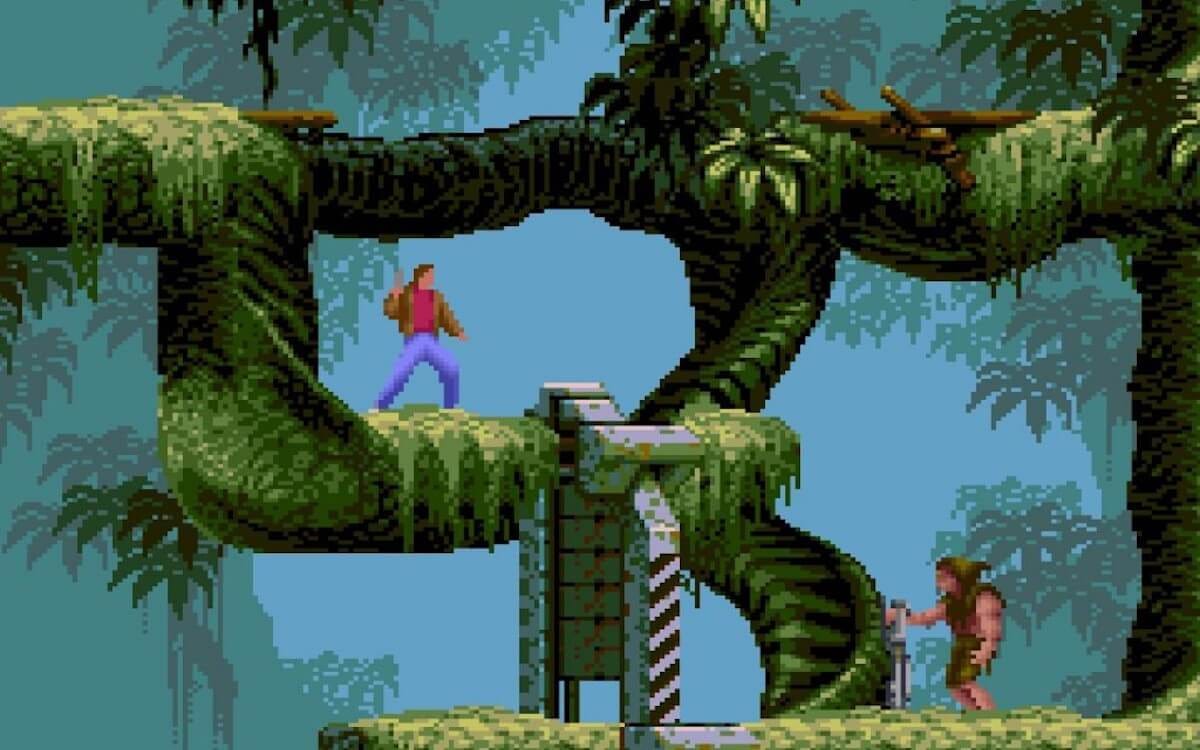
In 1991 Delphine released Another World, another cinematic platform game. Another World was designed by Eric Chahi and can be seen as something of a bridge between Mechner’s Prince of Persia and Flashback. While Prince had perfected the smooth animation, Another World introduced detailed, believable worlds and short cutscenes between stages. Flashback would improve on all of these aspects in such a way as to feel truly original. Of the rotoscoping technique the game used, it was developed independently from that of Mechner’s, however, it was a more complicated process involving tracing images from video onto transparencies before digitising them in the computer.
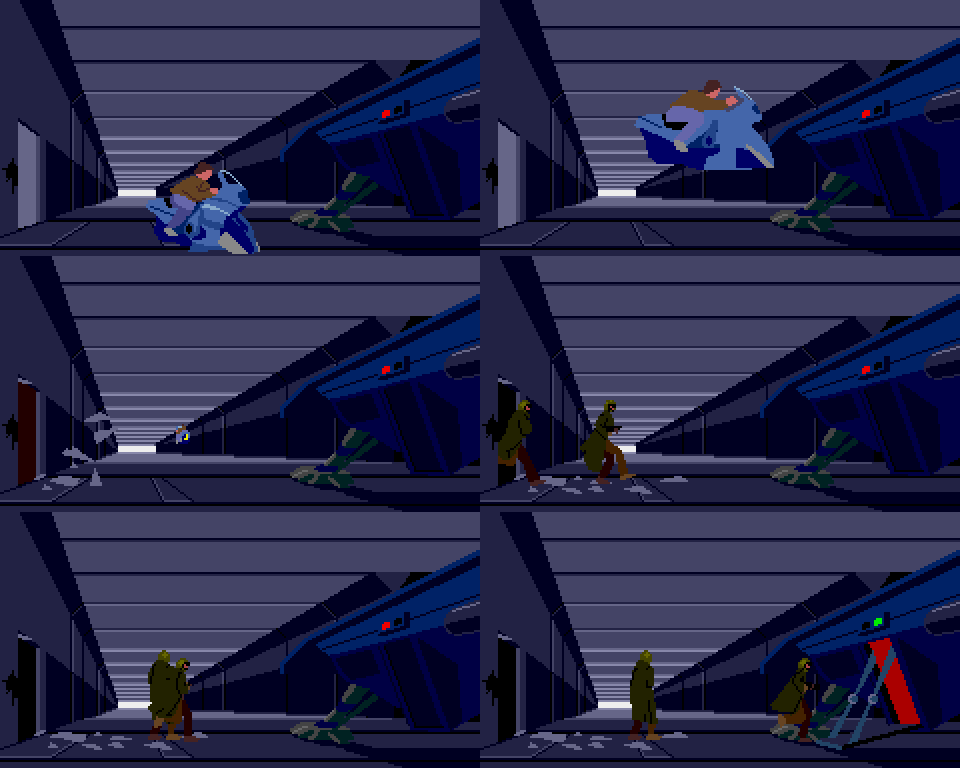
Likewise, Flashback’s cutscenes were much more detailed than those seen in Another World, with each being hand animated. For these, Delphine developed a polygon tool that required each scene to be animated frame-by-frame, causing the process to be quite slow. However, the process paid off, providing some of the most impressive and detailed animation seen on the Mega Drive (and Amiga) up to that point.
Due to the amount of animation frames needed to provide this quality, the game contained many more animation frames than was typical of the time, with main character Conrad having approximately 1000 frames of animation alone. Due to this, the game needed more storage than the then standard 16 mega-bit cartridges would allow. Not allowing this to dissuade them, Delphine developed a 24 mega-bit cartridge and showed the game to SEGA. SEGA were impressed both with Flashback’s amazing animation as well as Delphine’s ingenuity in creating the new cart, thus they granted permission to use the more expensive cart in release. Despite the larger cartridge size, the game’s huge amount of animation frames still presented a problem. Much compression was needed to fit the game into its plastic shell. “We had to compress everything and technically that was quite difficult to keep the frame rate and the animation,” Cuisset explained to Retro Gamer.
As with the protagonists of Prince of Persia and Another World, Flashback’s Conrad was quite the athletic fellow. The game sees him running, jumping, climbing, combat rolling and getting into gun battles all over the place. As with the previous games, tight controls were key as approaching any given situation without care could lead to an abrupt ending. For the most part the controls of Flashback work incredibly well, only really falling short during combat encounters. In these, Conrad can shoot either standing or crouched, but his movement from one position to another can be a little slow, resulting in commands not feeling as fluid and snappy as the rest of the gameplay. It’s a shame, as it is the only real blemish on an otherwise wonderful title.
As suggested by the US releases’ subtitle, Quest For Identity, the game relies on that oldest of video game tropes. At the beginning of his adventure Conrad has no idea of who or where he is. Having crash landed in a jungle, Conrad begins his adventure trying to find his way to the city of New Washington in order to discover his identity. His adventure will lead him across dense jungles, crumbling industrial cities, a television studio and even an alien planet. All are beautifully realised with wonderful detail and memorable designs.
After its initial release on Amiga and Mega Drive, Flashback was ported to pretty much every platform available, including MS-DOS, 3D0, CD-i, SNES, Jaguar and more. The game was a huge hit and by the end
of 1995 had sold 750,000 copies. It also has the honour of being listed in the Guinness Book of World Records as the best selling French developed video game. 1995 also saw a sequel, entitled Fade to Black, released for MS-DOS and Playstation. The game left behind the 2D side-on pixel graphics style of the original game in favour of a fully 3D third person adventure. Being one of the very first such games, it is somewhat hampered by the learning difficulties of using a new technology. Of this, Cuisset has said “...there were a lot of technical problems because we were learning how to place the camera, how to control the character. It was something we had no experience of.” Despite this, the game was still a success, hitting Platinum status on Playstation and selling 400,000 copies the year it was released. A second sequel was planned, entitled Flashback Legend, which would return to the game’s 2D roots, but sadly this was cancelled when Delpine went bankrupt in 2002.
Still, the memory of Flashback remained strong. In 2013 a remake of the original game was released for Xbox 360, Windows PC and Playstation 3. Developed by VectorCell and published by UbiSoft, the new Flashback moved from 2D to 2.5D and expanded the game with an expanded story, new dialogue and voice acting. Unfortunately, the game only received middling reviews and remains shrouded in the shadow of the original.
2023 saw the release of Flashback 2 which, confusingly, was actually a prequel to the original Delpine game. Developed and published by Microids for Windows, Xbox One, X Box Series, Nintendo Switch, and Playstation 4 and 5, the game was even worse received than the 2013 remake, with Metacritic listing it as the second worst game of 2023. Thankfully, three years earlier the original game, along with Another World, was released on modern consoles so that those who may not have been able to experience the game back in 1992 could finally do so.
While post-Fade to Black entries in the series may not have been successful, other titles have since kept the cinematic platforming genre alive, and even brought it into the 3D space. The most famous of these would arguably be Tomb Raider, but there have been others. The first two Oddworld games are perfect examples, as is the Little Nightmares series. Others, such as the brilliant Limbo and Inside keep the 2D perspective, while Canari Games’ Lunark is a wonderful spiritual successor to Flashback.
While we may not see another title in the Flashback series given the failure of the last two attempts at a revival, the fact that it is still possible to play the original today on modern systems speaks to just what a milestone Delphine’s game was. While Flashback may have been made for the Mega Drive originally, it’s brilliance could not be contained even by that console’s blast processing might.
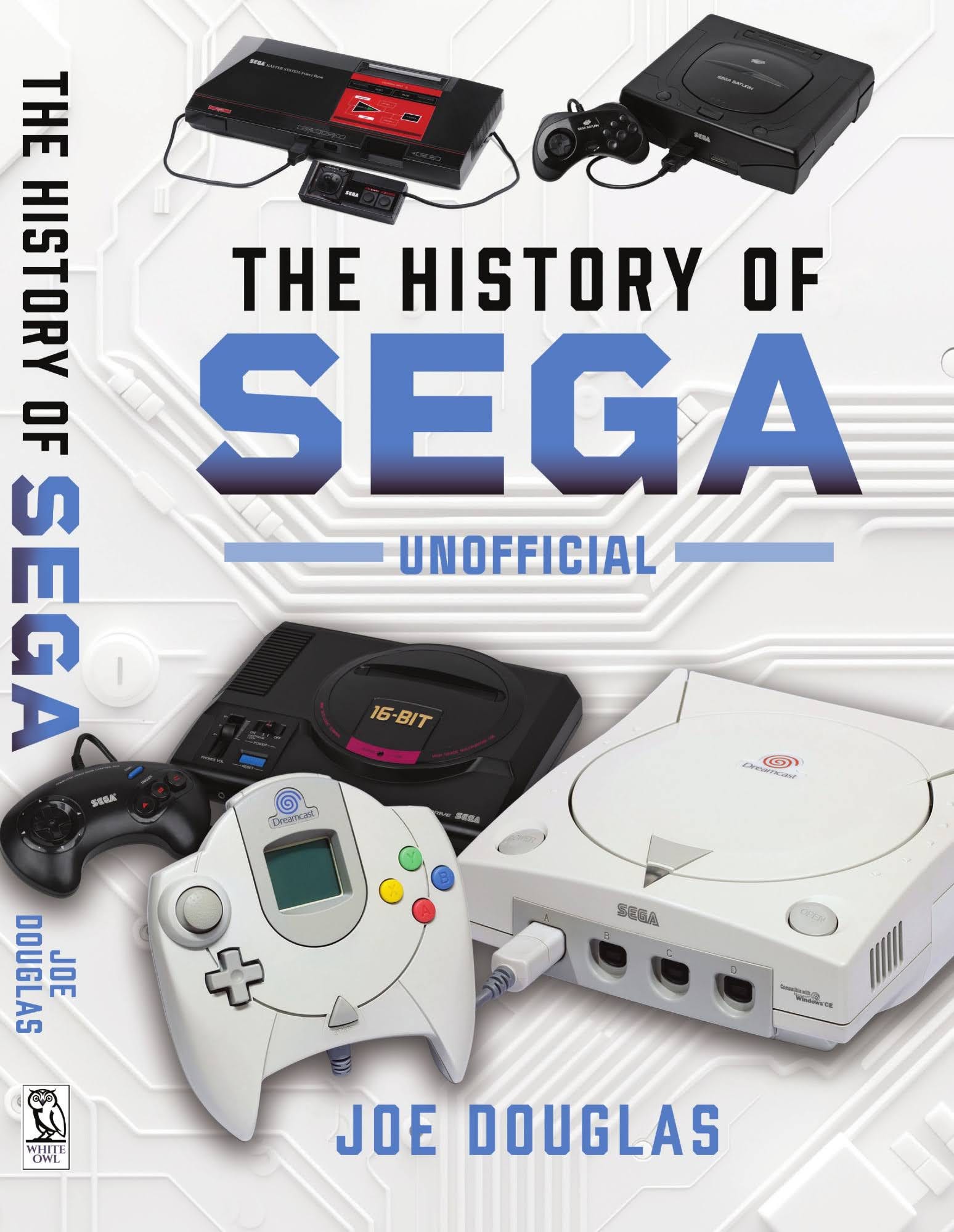
If you enjoyed this article, you might want to check out The History of SEGA, my book from Pen & Sword chronicling the history of one of gaming’s most influential companies. Now available for pre-order, you can all the info by hitting the button below.
Sources:
Jones, Darran, Flashback to the Future. Retro Gamer Magazine #118, July 18, 2013.
Maltin, Leonard, Of Mice and Magic: A History of American Animated Cartoons (Revised ed.). Plume Books, 1987
Excellent post, thanks Joe. I'm sure these days developers still face technical challenges, but back 30 years ago there seemed to be so much more ingenuity involved in realising an artistic vision which I kind of miss. The idea of cutscenes in a Mega Drive game were unfathomable until they pulled it off.
I really look forward to reading more from you
Excellent stuff man, well researched and well written! Can't wait for your book to come out.